
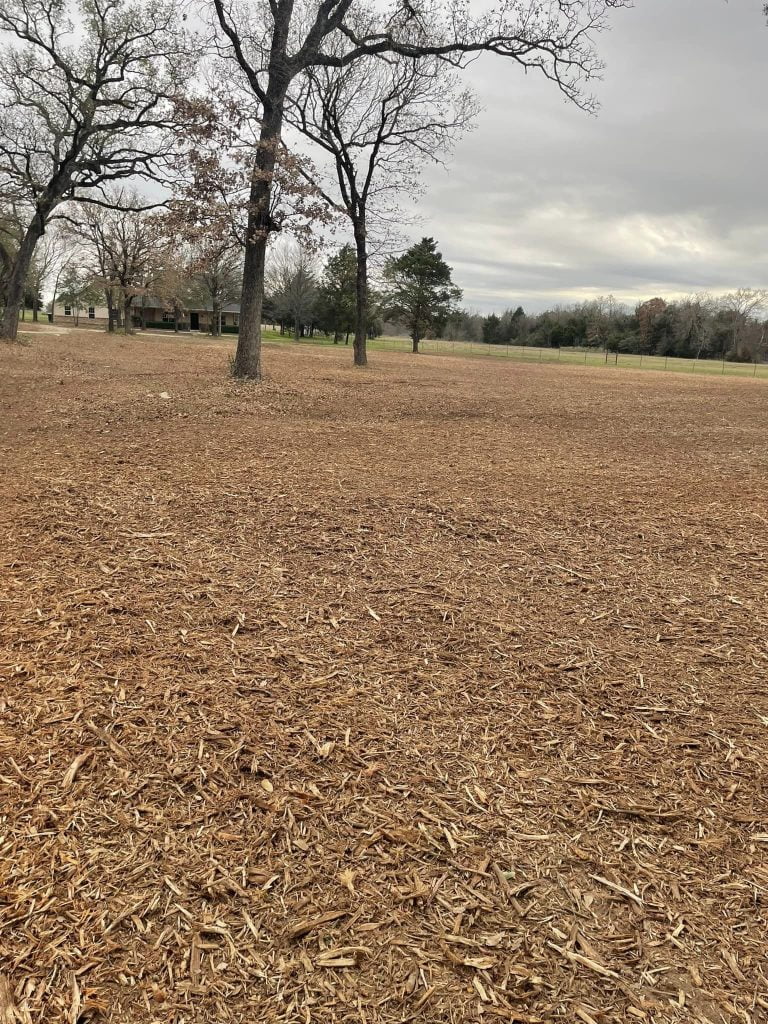
Texas landowners often think about wildfire risk after a dry summer, but winter is a smart time to reduce the brush that can carry a fire. Forestry mulching breaks dense vegetation into smaller pieces, opens access, and lowers the continuous fuel that lets fire move through a property. It does not replace a site-specific fire plan, but it can be a useful part of one.
Why winter is a good time to plan mulching
Winter gives landowners a clearer view of the property. Leaves have dropped from many hardwoods, tall grass is dormant, and fence lines, roads, ponds, and structures are easier to inspect. A crew can see where brush has filled in and which trees should stay before the growing season hides those decisions again.
Winter work also gives the ground time to settle before spring growth. If your goal is to reopen a pasture, improve access, or create a maintained buffer around a structure, planning before spring growth makes the project easier to organize. The right timing still depends on soil conditions, access, weather, and the type of vegetation on the site.
Texas A&M Forest Service includes winter-specific wildfire guidance because outdoor burning, equipment, and dry vegetation can still create ignition risks during the colder months. Its advice on winter wildfire prevention includes maintaining defensible space and reducing combustible vegetation around structures.
Did You Know? A property can have wildfire risk in winter even when temperatures are mild. Dormant grass, dead leaves, fallen limbs, and dense brush can dry out between rain events and create a continuous path for fire.
What forestry mulching changes on the ground
Forestry mulching uses a machine with a rotating cutting head to grind brush, small trees, and other vegetation where it stands. The material is spread across the work area instead of being placed in a tall pile or hauled away after every pass. This can make a property easier to access and maintain while returning organic material to the soil.
Mulching can reduce the height and density of vegetation. That matters because tall brush and small trees can act as ladder fuels, carrying a ground fire into larger tree crowns. Texas A&M Forest Service explains that mechanical fuel treatments reduce the amount and continuity of vegetation that a fire can use. Its guidance on mechanical fuel reduction also makes an important point: smaller mulched pieces can still burn, but they generally create less intense fuel conditions than standing brush.
Mulching is not the same as creating bare soil. It also is not a guarantee that a fire cannot cross a treated area. A thick pile of chips beside a building, fence, or access road can create a new problem. The finished depth and placement of the mulch should match the property goal, slope, drainage, and distance from structures.
Where winter mulching can help with fire planning
Dense brush between open areas
Thick yaupon, cedar, greenbriar, and mixed undergrowth can connect grass, shrubs, and trees into one continuous fuel path. Reducing that connection can slow fire movement and make later maintenance more practical. The treatment may include selective removal of smaller trees, brush reduction, or a wider clearing plan around a road or pasture edge.
Fence lines and access routes
An overgrown fence line is hard to inspect and can block equipment access. Clearing it can create a visible boundary and give landowners a better route for future maintenance. It can also reduce the brush that would carry a fire along the edge of a pasture or toward a gate, barn, or utility area.
Areas around homes and other structures
Defensible space is the managed area between a building and surrounding vegetation. The exact treatment depends on the structure, slope, vegetation, local guidance, and access. Texas A&M Forest Service advises removing or breaking up combustible vegetation so a wildfire has less continuous fuel and firefighters have safer working space.
Mulching may be one part of that work. Close to a home, the plan may also require hand removal, pruning, cleanup, nonflammable materials, or a different treatment. Do not place a deep layer of woody mulch against a building or treat a mulched strip as a substitute for local fire-safety guidance.
Pro Tip: Walk the property before requesting a quote and mark the structures, gates, utility lines, water features, mature trees, and access lanes you want the crew to protect. A simple map can prevent a good fuel-reduction plan from becoming a damaged-fence or blocked-access problem.
When mulching is not enough by itself
Mulching is a strong fit when the goal is to reduce standing brush and leave the site usable. It is not the best single method for every property.
If the ground must be bare for a building pad, driveway, or hay field, roots and stumps may need to be removed and the surface graded. If the site contains large timber, buried debris, steep slopes, wet soil, or an active construction plan, a crew may recommend a combination of mulching, dozer work, excavation, or site preparation.
Fire prevention also requires maintenance after the machine leaves. New growth, fallen limbs, invasive brush, and dead material can rebuild the fuel load. Texas A&M Forest Service recommends maintaining treated areas and reducing ladder fuels, not treating one visit as a permanent solution.
3T Brush Control can review whether mulching services fit the project. If the property needs a different treatment, its brush clearing service can address dense undergrowth, while land clearing and site preparation may fit larger development or grading goals.
A winter fuel-reduction plan that starts with the property goal
Before equipment arrives, decide what you need the land to do after the work. A pasture, homesite, fence corridor, hunting tract, and construction site do not need the same finish.
- Walk the property. Note structures, fences, roads, ponds, slopes, utility lines, and trees to keep.
- Identify the fuel problem. Look for dense brush, dead material, ladder fuels, blocked access, and places where vegetation connects one area to another.
- Choose the treatment. Mulching may fit standing brush. Hand work, dozer work, or another method may be better for large trees, stumps, structures, or finish-grade needs.
- Plan the follow-up. Decide how new growth, stump resprouts, fallen limbs, and access lanes will be managed after the first pass.
- Check local rules. If the project includes burning, prescribed fire, herbicide, or work near utilities, verify the applicable local requirements before work begins. Mechanical mulching can reduce the need for burn piles, but it does not remove every site-specific safety question.
Did You Know? Texas A&M AgriLife notes that firebreaks should match the vegetation, terrain, and goals of the property. A mixed treatment can be more useful than using one method across every acre.
Start winter fire-prevention work before spring growth
Winter mulching can reduce standing brush, improve visibility, and make later property maintenance easier. The best result comes from matching the machine work to the fuel pattern and the landowner’s end goal. It may be a first step, a targeted treatment around access routes, or part of a larger land-clearing plan.
3T Brush Control serves Streetman and surrounding communities within a 120-mile radius. Call (903) 390-0763 or request a brush-clearing estimate to schedule a property review. The team can look at the vegetation, terrain, access, and structures before recommending a practical winter plan.
Frequently Asked Questions
Does winter mulching prevent wildfires?
No. Winter mulching can reduce standing brush and break up some continuous fuel, but it does not make a property fireproof. Fire behavior depends on weather, wind, terrain, vegetation, maintenance, and ignition sources, so use a site-specific plan and local fire guidance.
Is mulched material still flammable?
Yes. Mulched material can still burn, especially when it is deep, dry, or piled. Texas A&M Forest Service explains that mechanical treatment reduces fuel intensity but does not make all treated material nonflammable. Keep woody material managed and away from structures according to the site plan.
Is forestry mulching the same as a firebreak?
No. A firebreak is a planned interruption in fuels, while mulching is a method for reducing vegetation and processing material in place. Whether a mulched area functions as part of a fuel break depends on its width, placement, remaining vegetation, terrain, and maintenance.
What should I clear first before winter wildfire season?
Start with areas where dense brush connects structures, roads, fence lines, grass, and wooded sections. Then review dead material, ladder fuels, blocked access, and places where firefighters may need room to work. A property walk can help prioritize the first treatment area.