
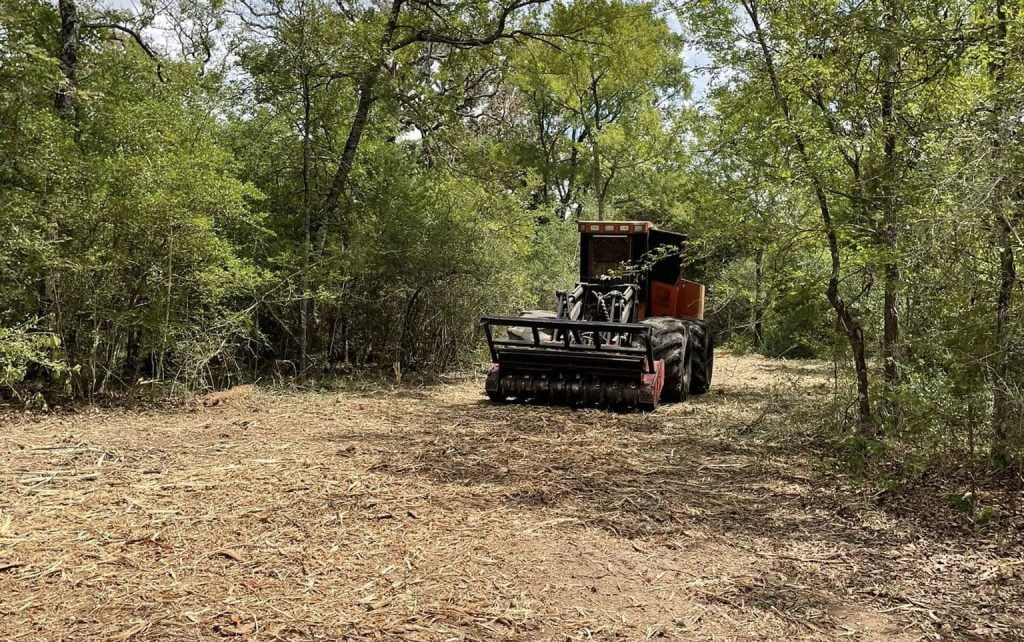
Brush clearing is the process of removing overgrown shrubs, small trees, vines, and dense vegetation from a property using mechanical equipment or hand tools. It restores usable land, reduces wildfire risk, and prepares a site for construction, agriculture, or improved access. Whether you own a few rural acres or a large ranch in East Texas, understanding how brush clearing works — and what it actually takes — helps you plan a successful project.
The 3 Questions Every Landowner Asks Before Clearing Brush
Before calling a contractor, most property owners want the same answers. Here they are upfront.
What does brush clearing cost? Expect to pay anywhere from $1,200 to $5,000 per acre depending on the density of the vegetation, terrain, and method used. Heavily wooded, uneven ground with cedar, mesquite, and thorny underbrush costs more to clear than open pasture land with scattered brush.
How long does it take? A single acre of moderate brush can take two to four hours with a forestry mulcher. A dozer working a denser five-acre tract may take a full day. Timelines depend heavily on the equipment selected and the complexity of the site.
Can I do it myself? Small areas with manageable brush — say, half an acre of scrub — can be handled with a rented skid steer or even hand tools. Anything larger, denser, or more uneven calls for professional-grade equipment and an experienced operator. Underestimating this is one of the most common and expensive mistakes landowners make.
Why Brush Clearing Matters More Than You Think
Overgrown land isn’t just an eyesore. It’s a compounding problem that gets harder and more expensive to fix the longer it sits.
In Texas, cedar and mesquite are aggressive. Left unchecked, cedar can take over a pasture in five to ten years, consuming water that would otherwise feed grasses. Studies have estimated that a mature cedar can use anywhere from 7 to 33 gallons of water per day depending on tree size and soil conditions — a meaningful drain on land used for grazing or farming. Clearing that cedar doesn’t just clean up the land; it actively restores productivity.
Fire risk is the other big motivator, especially heading into summer. Dry brush acts as fuel, and a single spark from a nearby road or power line can turn dense undergrowth into a fast-moving wildfire. According to the Texas A&M Forest Service, Texas experiences an average of 9,000 wildfires per year, and over 85% of them ignite within two miles of a community. Defensible space — removing or thinning vegetation within 30 to 100 feet of structures — is a standard fire prevention measure the Texas A&M Forest Service recommends for landowners across the state.
Did You Know? Texas ranks second in the nation for the number of homes at high wildfire risk, with over 3.2 million housing units in the wildland-urban interface according to the Texas A&M Forest Service. Brush management is the single most effective action a rural landowner can take to reduce risk on their property.
Brush Clearing Methods: Which One Is Right for Your Property?
There is no one-size-fits-all answer here. The right method depends on what you’re clearing, why you’re clearing it, and what you plan to do with the land afterward.
Forestry Mulching
Forestry mulching uses a single machine — a tracked or wheeled unit fitted with a drum head lined with carbide teeth — to grind vegetation into a fine layer of mulch right where it stands. There are no burn piles to manage, no haul-off costs, and no second pass needed. The mulch breaks down naturally and actually improves soil health over time.
This is the most popular method for East Texas landowners because it handles cedar, mesquite, brambles, and small trees in a single pass. It works well on relatively flat to rolling terrain and leaves the ground surface intact, which matters for landowners who want to reseed for grass afterward. Our forestry mulching and side cutting service covers this method in detail.
Dozer Clearing
A dozer pushes vegetation, stumps, and debris into piles that are then burned or hauled away. It’s the right call when you’re dealing with very heavy timber, large stumps, or land that needs significant grading after clearing. The trade-off is that dozer work disrupts the soil surface more aggressively, which matters if you’re planning to reseed or if erosion is a concern.
Dozer clearing is often paired with other services. Many projects start with a dozer pushing the heavy material, followed by a mulcher cleaning up the remaining undergrowth.
Chainsaw and Hand Clearing
For smaller, more selective jobs — trimming a fence line, clearing around existing trees you want to keep, or working in tight areas where machines can’t maneuver — chainsaw and hand clearing crews handle the detail work that equipment can’t. This method is slower and more labor-intensive, but sometimes it’s the right tool.
Pro Tip: If you’re planning to build on the land after clearing, you’ll want to coordinate brush clearing with site preparation, which includes grading, drainage planning, and soil compaction. Clearing alone doesn’t make land build-ready.
Equipment Used in Professional Brush Clearing
Here’s what you’ll typically see on a professional job site:
A forestry mulcher is the workhorse for most vegetation clearing. Machines like the Fecon FTX148 or the Tigercat M726G are purpose-built for high-duty-cycle land clearing and can clear an acre of moderate brush in two to three hours. The drum head spins at high RPM and grinds everything — stems, trunks up to eight inches in diameter, root collars — into chips.
A bulldozer moves the big material. A D6 or D8 Cat dozer handles mature trees, large debris piles, and grading work that a mulcher can’t do. When a project has a mix of heavy timber and brush, a dozer clears the path and a mulcher cleans up behind it.
A skid steer with a brush cutter head is the right tool for tighter spaces, fence line work, and smaller acreage where a full-size track machine is overkill. It’s nimble, less disruptive to the soil, and still handles vegetation up to four or five inches in diameter.
A chainsaw crew handles selective removal — taking out individual trees, cutting stumps low, and clearing areas where precision matters more than speed.
Did You Know? Modern forestry mulchers have GPS tracking and telematics built in. Professional contractors use this data to track productivity by acre and schedule equipment maintenance — which means fewer breakdowns mid-project and more predictable job timelines for you.
What to Expect During a Brush Clearing Project
If you’ve never had land cleared before, the process can feel like a lot of unknowns. Here’s a realistic walkthrough.
Before the job starts: A reputable contractor will walk the property with you before quoting. They’re looking at vegetation density, terrain, access points for equipment, any features you want to preserve (mature trees, fence lines, water features), and what the land needs to look like when they’re done. Be specific about your end goal — “I want to reseed for hay” is a different job than “I want to prep for a home site.”
During the job: Heavy equipment is loud. It will likely take one to several days depending on acreage. The crew works systematically across the property, and you’ll see significant change quickly. If you’re using a mulcher, the ground will be covered in a layer of chips — that’s intentional and will break down over the next season.
After the job: Walk the property with the contractor before signing off. Check the areas around any trees or features you wanted to keep. Good contractors do a final pass around the edges and access points to leave clean lines.
Pro Tip: The best time to clear brush in Texas is late fall through early spring — October through March. Vegetation is dormant, snakes are less active, the ground is firmer after summer rains, and fire risk is lower. Scheduling a project in this window almost always results in better outcomes.
Brush Clearing and Fire Prevention: A Note for Texas Landowners
Wildfire defensible space comes up in almost every consultation we do with rural property owners in Navarro, Henderson, and Freestone counties. The basic principle is straightforward: the closer brush and heavy vegetation is to a structure, your home, or a barn, the faster a fire reaches it.
The Texas A&M Forest Service recommends creating at minimum a 30-foot clear zone immediately around structures, with thinned vegetation extending to 100 feet when possible. This doesn’t mean bare dirt — it means managed spacing, removed dead material, and low-lying vegetation instead of dense brush. A well-executed brush clearing project can achieve this in a single day. Combined with our land clearing services, it’s possible to address both fire risk and long-term land productivity at the same time.
Did You Know? Property insurance carriers in Texas are increasingly asking about vegetation management practices near structures. Some insurers now factor defensible space into underwriting decisions for rural properties.
Getting a Quote for Brush Clearing
When you contact a contractor for a quote, have a few things ready: the approximate acreage, the type of vegetation (cedar, mesquite, mixed hardwoods, or general scrub), the terrain (flat, rolling, or steep), and what you plan to do with the land afterward. The more specific you are, the more accurate the quote will be.
Be cautious of any contractor who quotes a large project by phone without walking the land. Brush density, hidden drainage features, rocky soil, and buried debris all affect what a job actually takes. An honest contractor does an in-person walkthrough before committing to a price.
Frequently Asked Questions
What is brush clearing? Brush clearing is the removal of overgrown shrubs, small trees, vines, and dense vegetation from a property using mechanical equipment or hand tools. It prepares land for construction, agriculture, or improved access while reducing fire hazard and pest habitat.
How much does brush clearing cost per acre? Brush clearing typically costs between $1,200 and $5,000 per acre in Texas. Price varies based on vegetation density, terrain difficulty, the method used (mulching vs. dozer), and the distance from the contractor’s base of operations.
What equipment is used for brush clearing? Professional brush clearing uses forestry mulchers, bulldozers, skid steers with brush cutter attachments, and chainsaw crews. The right equipment depends on the size of the job, the type of vegetation, and the end goal for the land.
How long does it take to clear an acre of brush? A forestry mulcher can clear one acre of moderate brush in two to four hours. A denser acre with heavy timber may take a full day. Large multi-acre projects are typically quoted as full-day or multi-day jobs.
What is the best time of year to clear brush in Texas? Late fall through early spring — October through March — is the best window for brush clearing in Texas. Vegetation is dormant, snake activity is lower, and drier soil conditions allow equipment to move more efficiently across the property.
Ready to reclaim your land? 3T Brush Control serves landowners, ranchers, and developers across East Texas and a 120-mile radius from Streetman. We walk every property before quoting and match the right equipment to your project. Call us at (903) 390-0763 or request a free quote online — we respond within one business day.